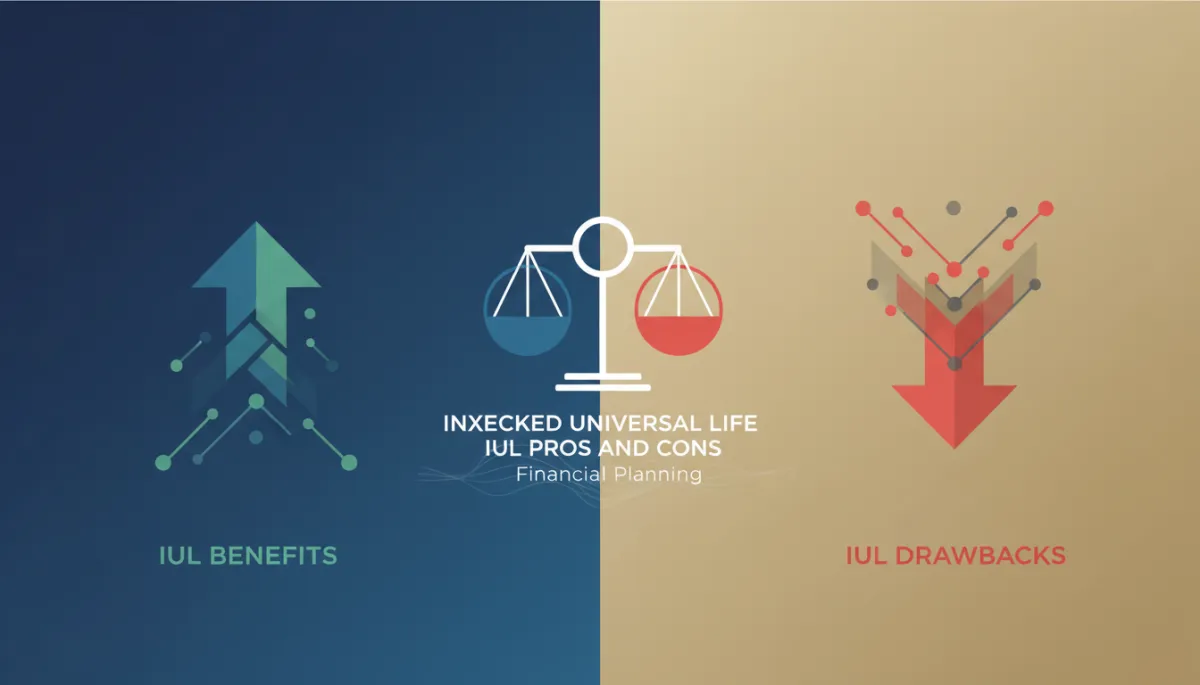
IUL Pros and Cons: A Professional's Guide
Insurance, Financial Planning
IUL Pros and Cons: A Balanced Look for Professionals
Indexed Universal Life (IUL) is increasingly appearing in conversations about sophisticated financial planning, but its complexity demands a clear-eyed review of IUL benefits and drawbacks before you commit capital.
Key IUL Benefits in a Planning Context
At its core, Indexed Universal Life combines permanent life insurance with cash value linked to a market index, typically the S&P 500. Among the notable IUL benefits are:
Downside protection: Floor rates can shield cash value from market losses.
Tax-advantaged growth: Cash value grows tax-deferred and can support supplemental, tax-favored retirement income if structured correctly.
Flexibility: Adjustable premiums and death benefits can align with evolving professional and business cash flows.
IUL Drawbacks and Practical Trade-Offs
A balanced review of IUL pros and cons must also highlight limitations. Caps and participation rates restrict upside, so returns may lag direct equity investing. Policy charges—cost of insurance, administrative fees, and riders—can erode early cash value, particularly if funding is inconsistent. In addition, illustrations rely on assumptions; professionals should stress-test scenarios rather than focus on a single projected rate.

Evaluating IUL works best when projections, costs, and alternatives are compared side by side.
For many professionals, Indexed Universal Life can be a useful complement—not a replacement—to traditional retirement plans. When integrated thoughtfully into a broader financial planning strategy, and monitored over time, IUL may offer attractive risk-managed accumulation and legacy benefits. However, suitability hinges on time horizon, risk tolerance, funding discipline, and access to a transparent, well-designed policy.
